Showing posts with label weather. Show all posts

Tuesday, 13 August 2024

Self Publishing promotion update: (August 2024)

Here is my latest update on the various promotional activities I have undertaken to try to spread the word about my self-published books, and how successful or otherwise these activities have been.

1. Social Media

I joined a number of reader and author groups on facebook and did my best to contribute as far as possible. Most have very strict ‘no promotion’ rules but some do offer opportunities such a monthly post where people can post kindle sales or new releases. Apparently the way authors game these groups is to team up and then talk about each other’s books. Unfortunately I don’t have a team of author friends willing to big me up, so I just have to play by the rules. Where I was allowed to I advertised the kindle countdown sale for The Arid Lands and my ARC signups for Dragons of Dunmoray. The main benefit from joining these groups was the helpful advice on offer.

Other social media activities continued as normal.

2. ARC Readers

In the run up to self publishing my new book, Dragons of Dunmoray, decided that, rather than approaching review blogs, I would reach out for ARC (Advance Review Copies) readers. I set up an ARC signup form on google forms and included one important question – Why do you want to read Dragons of Dunmoray? This deterred non humans very effectively. I only had one signup who was clearly a bot.

So far I have sent out 20 review copies. Hopefully this will prove to be a better approach than my previous efforts of approaching review blogs directly.

3. Readers Book Club

The Arid Lands was chosen as book club read for April/May and the organiser sent out six free copies to the participants. There was lively discussion but then one of the participants warned everyone than Amazon frowns on authors leaving reviews for other authors’ books and will cancel your KDP account if they catch you. So this immediately killed off anyone leaving reviews for anyone else, which was a shame.

I did ask the participating authors if anyone would be happy to let me have quotes that I could use in my promotion, but nobody responded.

As of now this group appears to have fizzled out.

4. Indieverse awards

This has come to nothing and I won’t be pursuing it any further.

5. SPSFC4

I plan to enter The Arid Lands into SPSFC4. I thoroughly enjoyed taking part in SPSFC3 and although Red Rock didn’t make it past the first round I feel it raised my profile plus I discovered some fantastic new authors and books.

6. Kindle Sale

I ran a two day kindle countdown deal for The Arid Lands in June. Sales had tailed off over the preceding couple of months so I hoped that this would give it a boost. I did my best to promote it wherever I could but only picked up a handful of sales.


So in conclusion the approach I took to find ARC readers has been significantly better than pitching to review sites. Final tallies for how many ARCS I will send out at the proportion that translate into reviews are yet to be determined.


Monday, 1 July 2024

The Dragons are Coming


I have a new novel in the pipeline, a dark fantasy set in Scotland. I'll be telling you more in the coming weeks, so watch out for my cover reveal! Not long to go now!

Tuesday, 9 April 2024

Review: The Poison Balance by Lucy Ghose

 The Book:

‘When the rains fell, the world burned…’

After a childhood spent in the foster care system, failed PhD student Amy Weston attracts trouble wherever she goes. Acid rain is destroying London’s trees, brain lesions are turning once-harmless pets into killer dogs, and her new work colleague, Professor Joel Harket, is the most infuriating man she has ever met.

But when the media continue to insist that autumn has simply come early, and humans begin to experience the same symptoms as the killer dogs, Amy must work alongside Joel in order to convince the world of the seriousness of the situation, before it is too late.

From the UN Air Health summit in Beijing to the abandoned tunnels beneath the city of London, Amy and Joel search for answers to prevent the end of the world, and as Nelson’s Column crumbles and zombie-like ‘howlers’ wreak havoc worldwide, they discover that the only way to survive the apocalypse is to set aside their differences… and learn to trust each other.


My Thoughts:


I enjoyed this book immensely. It was a really good and entertaining romp. The novel starts off very much as a technothriller. We meet Amy and Joel, two very different people who at first appear mis-matched. The concern is the sudden increase in acid rain which is having all sorts of unexpected effects and Amy and Joel team up to try to investigate this phenomenon.

The story thus far feels very much as I would expect from its billed genre of eco thriller and I was quickly hooked as this sort of thing is right up my street.

But things rapidly shift. The acid rain causes anyone it touches to turn into a howler. These are effectively zombies and before long we are caught up in the middle of a zombie apocalypse which Amy and Joel are trying to survive, find a cure and save the world. All the while their feelings for one another are growing and these two polar opposites are inevitable drawn together.

The acid rain is a really original method of zombification and the book is a lot of fun.

If you like a good zombie apocalypse with a good dollop of romance thrown in them this is the book for you.

Recommended.

Tuesday, 26 March 2024

The Arid Lands themes: Zanclean Flood


About 5.3 million years ago, after years of sustained evaporation had resulted in the landlocked Mediterranean Sea almost completely evaporating, the waters returned when the Straits of Gibraltar was breached. This, possibly the largest flood in known Earth’s history, is known as the Zanclean Flood.

Details of the rapidity and nature of this flood remain up for debate but recent studies of deep gully like incisions in the seabed near the Straits of Gibraltar and extending out into the Mediterranean Sea itself, suggest that this could have been a catastrophic event.

Although initially discharge was low, and this may have continued for thousands of years, about 90% of the water returned in as little as a few months to two years. Such an abrupt flood would have seen sea levels in the Mediterranean rising by as much as 10 metres per day.

So how does this fascinating event influence Inez’s story? You will have to read The Arid Lands to find out.

The Arid Lands is available from Amazon in both kindle and print format.

UK Link

US Link

Wednesday, 21 February 2024

The Arid Lands themes: A vast engineering project


In the 1920s the German architect Herman Sorgel came up with the concept for a vast Engineering project to build a hydroelectric dam across the Straits of Gibraltar. This project was known as Atlantropa and was promoted by Germany until Sorgel’s death in 1952.

The construction of this dam, along with several others at strategic locations, would have the effect of controlling the inflow into the Mediterranean from the Atlantic. It would have generated vast amounts of electricity as well as causing the Mediterranean Sea level to drop by 200m, so freeing up large areas of land for colonisation.

Sorgel saw this project as a gateway to forming a peaceful Pan-European utopia, although critics found many faults with his proposals, including the detrimental effects on coastal communities who would become stranded as the seas retreated, as well as the problem of finding agreement amongst all the counties which border the Mediterranean.

The project was largely forgotten after Sorgel’s death.

But what if it really had happened? What if the dams really were built? Of course, in The Arid Lands the capacity for generating hydroelectric power was never realised, for reasons you’ll have to read the book to find out. This resulted in the Mediterranean inflow being completely cut off, and as a result, some 600 years of evaporation later, the world of The Arid Lands where Inez and her people struggle to survive, has come into being.

The Arid Lands is available from Amazon in both kindle and print format.

UK Link

US Link

Thursday, 25 January 2024

The Arid Lands themes: Climate effects of a dried up sea.


As I have mentioned in a previous post, 6 million years ago (Ma) the Mediterranean Sea entered a phase of desiccation when it became cut off from the Atlantic, and almost completely dried up. This is the same scenario I have envisioned for the alternate future world of The Arid Lands, where Inez and her people struggle to survive, not knowing that everything is about to change.

The desiccation of the Mediterranean Sea would have a number of knock-on effects for the climate of the surrounding lands as well as creating a unique environment in the basin itself.

The climate of the basin can only be speculated for no equivalent environment exists on Earth today. But it is likely that as the depth of the basins increased so did the temperatures, possibly reaching summer midday highs of as much as 80C at its deepest points. This would not allow the existence of permanent life and it is likely that temperatures were nowhere near this extreme. But they would have been elevated enough to make life there extremely uncomfortable and difficult.

The surrounding areas would also experience climatic changes. Currently evaporation from the Mediterranean Sea provides moisture to the atmosphere which drives rainfall across much of the surrounding areas. With the Sea drying up there would be no input of moisture to the atmosphere and these rains would fail, resulting in a significantly drier climate over most of the central and eastern mediterranean belt.

In fact, the Mediterranean climate that we associate with Greece, Italy and the Levant would exist only in the Iberian Peninsula and NW Africa.

The desiccation would result in the extinction of much of the marine flora and fauna native to the basins, but the fusing of the two land masses would allow dispersal of terrestrial animals across the region.

Inez’s people survive by fishing for shrimp in the brine pools. In truth such a hypersaline environment would be hostile to life, but life is adaptable and my poor basin dwelling people have to eat something. Hence the shrimp. But apart from that I’ve tried to keep the environment in which they live as plausible as possible.

So how did this scenario arise in the world I have created? That will be the subject of a future post on this blog.

The Arid Lands is available from Amazon in both kindle and print format.

UK Link

US Link

Wednesday, 3 January 2024

The Arid Lands themes: The Messinian Salinity Crisis

My newly released SF novel, The Arid Lands is set some 600 years from now, in an alternate future when the Mediterranean has almost completely dried out. It is in this inhospitable landscape of salt flats and occasional pools of hypersaline brine that Inez and her people struggle to survive. Inez knows no other existence. But all that is about to change.

You may think that the idea of a vast sea such as the Mediterranean almost completely evaporating is pure fiction, but let me tell you, it is not. For the Mediterranean Sea did indeed dry out, albeit a long time ago.

About 6 Million years ago (Ma) the Mediterranean Sea became disconnected from the Atlantic Ocean. During the period that followed, known as the Messinian Salinity Crisis the sea almost completely evaporated.

The closing of the connections between the Mediterranean and the Atlantic Ocean, which is now the Straits of Gibraltar, was caused by the shifting tectonics in this region. This isolation of the Mediterranean from the main inflow happened several times, between 6 and 5.3 Ma.

The initial phase was one of repeated cycles of evaporation and replenishment which led to the formation of thick sequences of evaporite deposits, minerals such as halite and gypsum, deposited from the evaporating seawater.

The connection was then cut off for a prolonged period of time. During this later episode of desiccation, the Mediterranean became a dry basin, as much as 5 km deep, with only a few hypersaline pockets of water remaining. This process of drying out the Mediterranean Sea is estimated to have taken about 1000 years.

The Mediterranean remained dry until 5.3 Ma when the Straits of Gibraltar were finally breached, and water flooded back into the Mediterranean basin in the form of a cataclysmic flood, and so the Mediterranean Sea as we know it today was formed.

But the thick evaporite deposits and the presence of deep canyons in the seabed which cut down into the abyssal plains as water returned to the sea are testament to this arid phase in the Mediterranean Sea’s history.

This is the setting for The Arid Lands. A hostile environment that once really existed. I will talk more about this geological event and how it inspired the world I describe in The Arid Lands in future posts on this blog.


The Arid Lands is available from Amazon in both kindle and print format.

UK Link

US Link

Wednesday, 23 August 2023

The Arid Lands

This blog has been quiet recently for a number of reasons. Firstly I never have much spare time during the summer months, life takes over and there are so many places to see and things to do. I’m very much an outdoor person and can think of nothing worse than sitting indoors at my computer when the sun is shining inviting me out to play.

But in between all this sunshine and frolics things have been happening and progress has been made. The new thriller is coming on well, and I have decided to self publish my next Sci Fi book, just because I can.

Originally I felt it was important to have a proper release schedule for my self published books in order to increase visibility, but the sorts of schedules that people advise are well beyond my reach, and even if I did save up my books to release in rapid succession, there would still be a cliff edge when I stop.

So I have decided to release them as I am ready, not worry too much about schedules and simply enjoy the process.

So I am delighted to announce that my next book, THE ARID LANDS, a Sci Fi Thriller with a dystopian feel to it, will be released on the 19th October.

I will be telling you more about it over the coming weeks, starting with a cover reveal – watch this space!

Thursday, 11 February 2021

Melting Ice and Rising Seas

My first piece for the Climate Fiction Writers League is now live over on their blog. You can find it here: Melting Ice and Rising Seas. Do check it out. The League is a wonderful resource for all things CliFi related!

Monday, 21 December 2020

Welcome to the Climate Fiction Writers League

I have recently joined the Climate Fiction Writers League, an exciting new venture set up by author Lauren James.

The league has members from all over the world who have one thing in common – we have all seen the perils that climate change poses to our planet and have used this threat in our fiction.

From picture books through to YA, adult SF and contemporary fiction you can find books that explore a wide range of scenarios and environmental issues, any of which could be our future.

The books may carry a message, but not at expense of story, so do pop over to the website and see who is involved, sign up to the newsletter, and discover some wonderful books.

Visit the Climate Fiction Writers League here: Climate Fiction Writers League

And read more from Lauren about why she has set up the League over at Tor: Lauren James Launches Climate Fiction Writers League


Thursday, 12 March 2020

Living in a Dystopian Novel

There is a blurring of fiction and reality. The world we live in has changed, in many ways not for the better. We thought we were safe, living in our technological bubble. But all that is changing.

It really does feel as if we are players – minor characters in a real-life dystopian novel. We didn’t choose these roles. But now we have to let the story play.

Over the years I have written about climate change – Cli-Fi – Climate Fiction it was called. Nobody reads it any more. Probably because it is real now. Climate fact. I wandered down to the harbour at Spring tide and the roads alongside the harbour wall were awash. Two weeks ago at the last spring tide it was the same. Cars were ploughing through, sending up plumes of spray. The salt water will rot their bodywork but the drivers don’t seem to care.


People have other things to worry about. There’s a virus spreading across the world, out of control in many places. Nobody bothers too much when it’s somewhere else. But it’s not somewhere else. It’s here. It’s happening now.

I went to the supermarket and the shelves were bare. Not all of them, but oddly people are stockpiling toilet roll. There’s a craziness about the world we live in. Historians of the future will study it in great depth, I have no doubt. Maybe they’ll puzzle over the toilet roll panic. I certainly did.

Maybe I need to brush up on my survival skills. Do I know where to forage for food? Could I skin a rabbit? Should I be building a bunker at the bottom of my garden? Or will a well-stocked freezer and larder suffice?

Will it all blow over and life continue as before? Will the summer be one of spritz in the sunshine, laughing at the craziness of it all?

Either way, I still get the feeling that I’ve been trapped in a novel. An oddly surreal novel.

The next few weeks will tell.

Friday, 6 December 2019

Revisiting Malta

In most of my novels the action moves around geographically. I love writing about interesting places, and I love visiting those places. Whenever I travel it is always with half a mind on how I can incorporate these settings into my fiction.

Red Rock was no exception. The action moves across Europe, and one of the places Danni ends up in is Malta.

I revisited Malta earlier this year, after quite a long gap, and I went back to some of the settings where Danni has her adventures. Malta has changes a lot in recent years, the most noticeable difference being the amount of development that has happened, and is still going on – skylines dominated by cranes and half-finished buildings all along the coast. But some things haven’t changed and it’s still easy enough to escape the main tourist centres and explore the island's less visited corners.

So here are a few pictures from my travels.

Megalithic ruins, very like the ones Danni hides in on Comino - 
only these are actually on Malta

Danni doesn't visit Gozo but I thought I'd include this - 
it's where the Azure Window used to be.

The citadel, Victoria, Gozo

Fishing village of Marsalforn, Gozo, on a stormy day

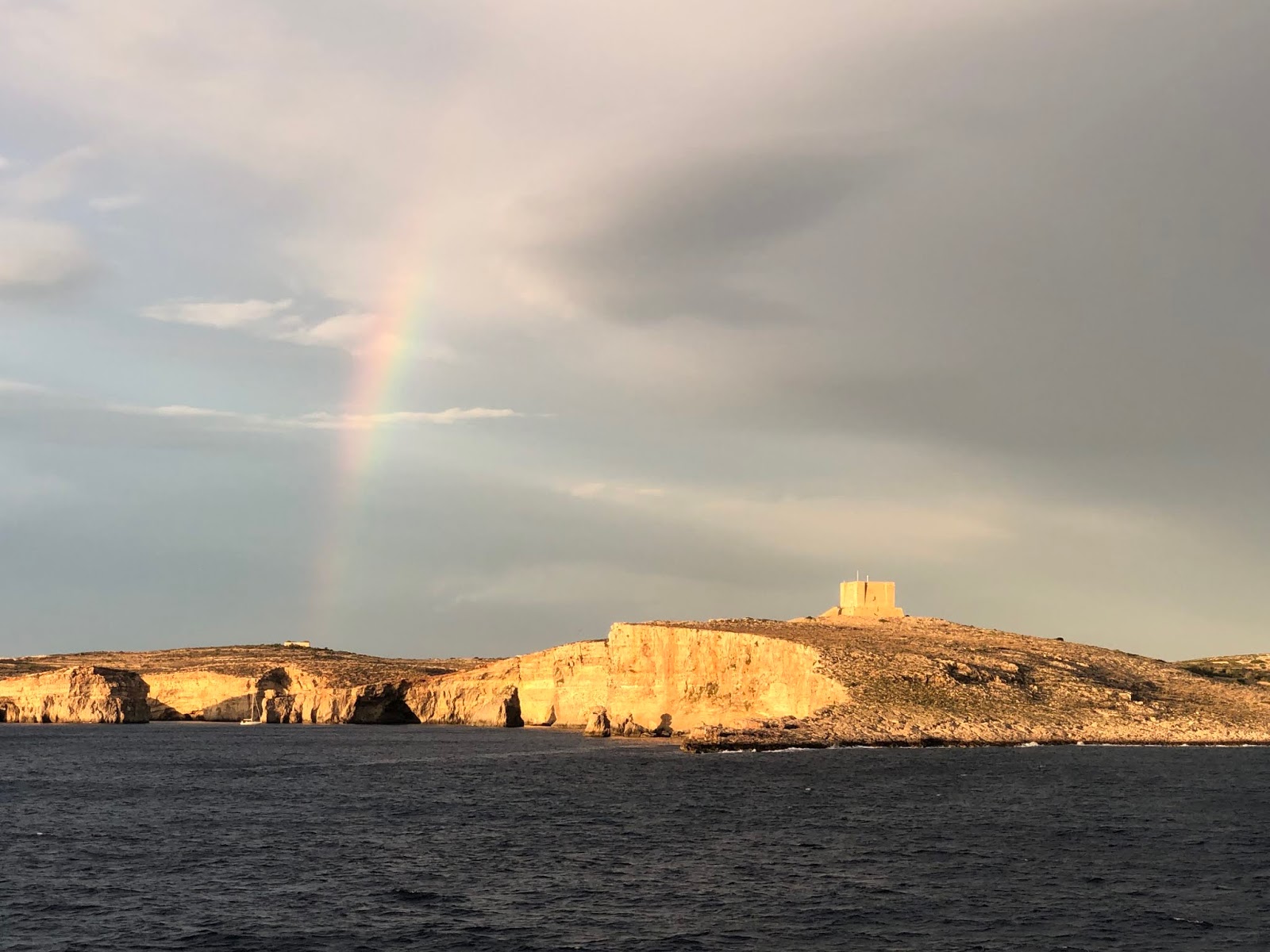
Comino viewed from the ferry. 
The chapel you can see was the inspiration for the monastery Danni finds.

Typical Maltese coastline with Gozo in the distance

Thursday, 1 August 2019

What Happened to Cli-Fi?

Six years ago my YA Cli-Fi Novel was about to be launched onto the world, and Cli-Fi (short for Climate Fiction) was the latest buzz.

My publisher pushed this aspect of the story as part of their marketing plan. People were talking about climate change and the threat it posed and more and more authors were exploring climate change related themes in their work. It felt as if fiction was the perfect medium to bring climate change to the attention of the world.

For a while it seemed to be working. I took part in panels at literary events and ran workshops in schools that formed a crossover between literature and science. There was genuine interest.

And yet… Here we are, six years on.

Cli-Fi as a sub-genre never really took off the way we hoped. Every now and then it bubbles up, a new book comes out that explores these themes, and then it fades away. And the world itself? Has anything really changed? The science is still there, gathering momentum as the evidence mounts. Weather is becoming more extreme. Global temperatures are increasing. Sea levels are measurably rising.

But where is the action? Where is the call to arms? Politicians have come and gone yet it feels like we’re stepping backwards. Science Fiction is about to become Science Fact. The world I created in Red Rock feels closer than ever, and that’s not a comfortable thought. The coastal areas are already under threat and there’s a strange unease in the air – a society on the brink.

I can’t help wondering why this is. Maybe as our civilisation spirals inexorably towards becoming a real life dystopian novel people feel less inclined to read about such things. Is climate change something people don’t want to think about? Because maybe they should.

Tuesday, 25 June 2019

Signs in the Skies

Last night I saw a pink rainbow, arching over the sea. It was dusk and threatening thunder. The approaching rain clouded the surface of the sea and blurred the horizon. Then the rainbow appeared, glowing pink against a dusky sky. I stood and watched until the sun set behind me, the rainbow dulled and the night closed in.

I took this picture but is doesn’t do justice to the magic of the moment.


Monday, 6 March 2017

Squally Seas

It was squally down at the beach today. 

One moment the sun broke through, lighting the shingle golden and turning the sea to jade, then the skies darkened and the rain swept in. 


We took shelter down by the shore and watched as the rain pocked the surface of the sea and the wind whipped the waves into spray. Out in the bay the ships looked as if they were floating on mist.


Then the rain passed, clouds dragging their burden out to sea and the sun lit up a rainbow, brilliant against the darkness of the sky.


Our world may have entered squally times - but there’s always a rainbow.

Thursday, 23 April 2015

The Guardian – Eco week and twitter chat

It’s Eco-Week over on the Guardian’s Children’s site, and a variety of authors have been contributing articles on all sorts of eco-related themes, from Piers Torday talking about why Cli-Fi isn’t Sci-Fi to Helen Skelton talking about how her kayaking expedition up the Amazon inspired her new book.

I was also fortunate enough to be invited to take part and today my top tips for writing an eco-adventure story goes live.

So do head over there and take a look – Here’s the link - and tonight why not join all the authors for a twitter chat #GdnEcoChat between 7 – 8 pm (UK time). I’ll be there and I’ll be happy to answer any questions you may like to ask

Friday, 20 March 2015

Tides and Eclipses

Today the UK witnessed a partial eclipse. Where I was it was cloudy, too cloudy to see much, but I stood in the supermarket car park looking up at the sky as the world dimmed around me. It felt like it does on a stormy day as the thunder clouds gather, an odd brooding twilight. It was only as I drove home that the clouds thinned enough for me to glimpse a pale crescent through the haze.

Photo  © Ciara Kelly
The last eclipse, in 1999, down here in the west, was far more dramatic. We gathered round a friend’s house as the light faded and the gulls began to roost and toasted the darkness with champagne. There was the same strange gloomy twilight, but the dimming was much more pronounced since we were not far from totality. The light fell suddenly, as if some celestial being was turning down the dimmer switch. The birds fell silent, and over on Portland we could see the flashes from people’s cameras in the shadow. Then the light returned equally swiftly.

But more dramatic as far as I am concerned – and I am a Marine Scientist after all so perhaps this is not surprising - was the super low spring tide this morning. We walked right out, almost up to the Sea Life tower without getting our feet even slightly wet. I haven’t seen it out quite so far before – and tomorrow’s low tide will be even lower! Of course, there will be a corresponding high high tide in a few hours time, so I might pop down and see how the flood defences are holding up. In the meantime, here a couple of pictures.


Thursday, 15 May 2014

Cli-Fi Authors: Natasha Carthew

Cli-Fi, or Climate Fiction, is on the rise as more and more authors become aware of the impact that climate change is having on our planet and start to explore the possible effects through fiction. We are shown futures beset by rising seas, deforestation, frozen wastes and endless droughts. None of these futures are ones we wish to see – and yet all are frightening possibilities!

But what of the authors of these books? What drew then to climate fiction? What are their fears for our planet? How realistic are the scenarios they describe?

In order to answer these questions I have invited a number of my fellow Cli-Fi authors to answer a few questions on this blog over the coming weeks.

First up is author of the wonderful Winter Damage -Natasha Carthew.

Natasha Carthew is a Country Writer who lives in her native Cornwall with her partner of eighteen years. She writes full-time and runs wild writing workshops for all ages.

She has had three books of poetry published but Winter Damage is her first novel. Her second book The Light That Gets Lost will be published by Bloomsbury in February 2015.

Welcome Natasha to The Scribbling Seaserpent. Please start by telling us a bit about yourself and your book.

WINTER DAMAGE is a story about youth reclaiming their future whilst navigating forever snow and sub-zero temperatures in a never ending winter. A presentation of suffering and despair and the nature of our broken society set against the beautiful, harsh landscape of Bodmin Moor, Cornwall.

How has climate change played out in Winter Damage?
The climate has already changed for good in Winter Damage and plays a part in societies collapse. It’s set in what most people would call Dystopian Present but I call Justopia (It’s just happened or just about to happen). The fall in temperature and the snow in a part of the world that only occasionally gets this kind of severe weather gives the reader some indication what the book is about. The weather get worse through the unravelling of the story and the characters (and us as readers) know without much doubt that this is how things are going to be from now on.

Had you heard of the term Cli-Fi when you started writing Winter Damage? What first brought the term to your attention?

I had heard the term before but didn’t think to apply it to Winter Damage until you did.

What compelled you to write about climate change?

The climate, the weather and the changes and temperature of the seasons plays a massive part in my life (I write entirely out of doors and run Wild Writing workshops). It’s very important to me to include issues that affect us all in my work, especially environmental ones. Strange climate patterns feature heavily not just in this book but also my next two books.

How do you feel about Cli-Fi as a means of getting the climate change message across?

It’s a great way to get the message across, especially in Young Adult Fiction. It’s also important to get a few facts in the writing somewhere, push the seriousness that this could happen/is happening. So many young people have concerns about climate change which is great, their awareness means they are the ones who will ultimately take further steps to protect the planet.

Are we already starting to see the effects of climate change and what do you think the future holds for our planet?

I believe we have been seeing the effects of climate change for a long time and most people, especially in this throwaway culture of ours, don’t do enough for the environment because they don’t believe that the changes are happening or will happen. I believe that some kind of climate/doomsday scenario if not too far away (Justopia) and then maybe the planet can get on with the business of healing itself. Until that time, I’ll just keep on writing about it.

Thank you Natasha. I’m looking forward to your next book! 

Monday, 5 May 2014

Wistman's Wood

We headed up onto Dartmoor in the spring sunshine, followed the track north from Two Bridges – and came to Wistman’s Wood.


This is an eerie place of twisted trees and moss covered boulders - high altitude oaks that almost appear to be sprouting from the rocks themselves. Even in winter, when the trees are not in leaf, the woods are green, branches festooned with mosses and lichens, ferns sprouting from the boughs, as if to give them their own set of antlers.


Local legend claims that the devil inhabits these woods, his ferocious wisht hounds lurk among the rocks and the wild hunt rides out from here across the moor, baying for the blood of sinners. Most of the time this wood is dripping wet, shrouded in drifting mist and thin rain and you could well believe these legends to be true, the devil watching from between the trees, his hounds stalking you as you move among the rocks.

But this day of spring sunshine the woods seemed a friendly place, gnarled branches stark against the blue of the sky, mossy boulders forming a carpet of hummocks and a peaty stream bubbling over the rocks in the valley below.


It is a place of weird beauty.

A place of stories.

A place to come back to in moonlight…

Friday, 14 March 2014

Somerset Floods - 2014

As the waters start to recede

Looking out across the levels

Gateway to nowhere

Along the River Parrett